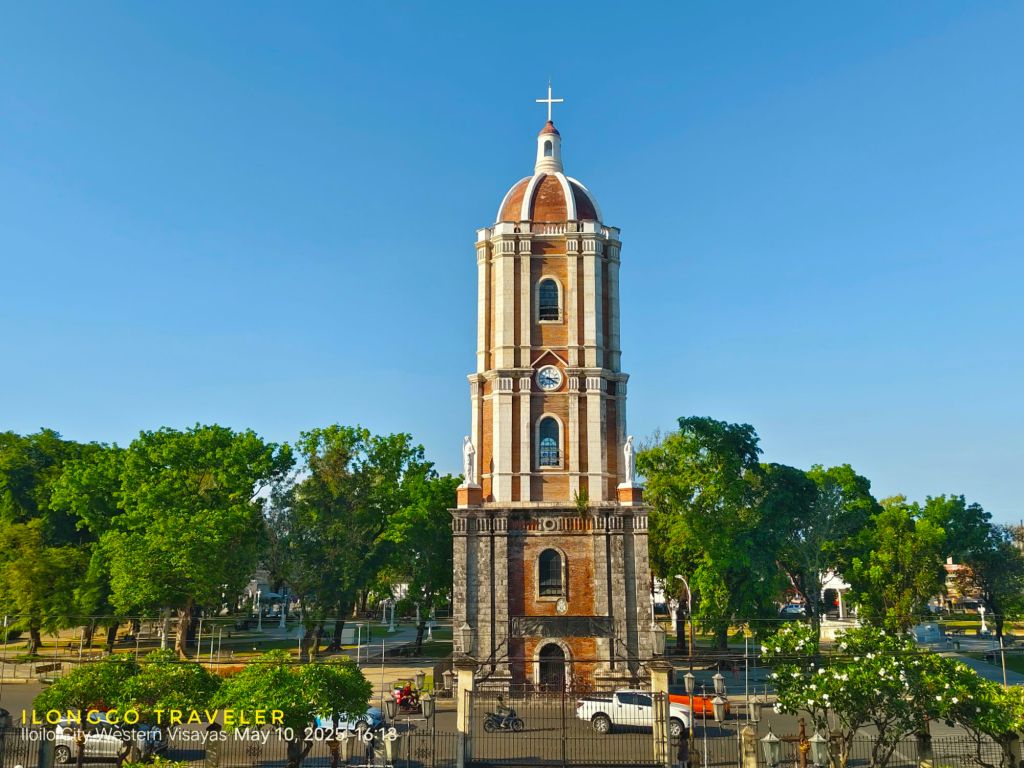
The Jaro Belfry’s story is one of survival and revival. Originally constructed in 1744 to call worshippers to mass, its purpose expanded over centuries. Though earthquakes like the devastating 1948 Lady Caycay tremor left it tilted and fractured, the belfry underwent transformative improvements that ensured its endurance. A major restoration in the 1990s carefully blended 18th-century craftsmanship with modern engineering: steel reinforcements were hidden within its red-brick façade, and seismic retrofitting stabilized its iconic lean. Local artisans replicated original brickwork using traditional kiln techniques, ensuring historical accuracy.
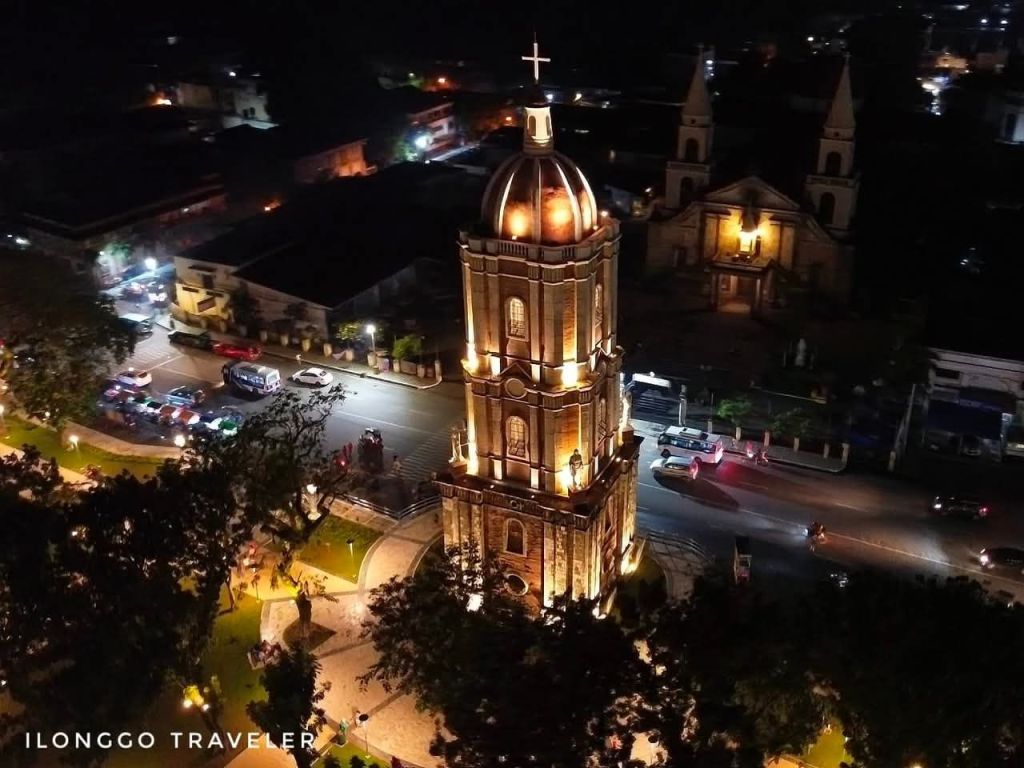
Today, the tower’s bells—forged in the 1800s and painstakingly restored—still ring with clarity. The largest, Santa Maria, now hangs on a reinforced steel frame, its copper alloy polished to revive its 19th-century resonance. Even the plaza surrounding the belfry saw upgrades: drainage systems were installed to protect its foundation, and LED lighting now illuminates its façade at night, a subtle nod to modernity that respects its antique soul.
Where Past Meets Present
Jaro Plaza’s recent improvements extend beyond the belfry itself. Interpretive plaques in Filipino and English now line the walkways, detailing the tower’s history and restoration journey. A community-led initiative in 2020 added heritage gardens planted with native species like ilang-ilang and kamias, creating a greener space for gatherings.
During the Jaro Fiesta, the plaza’s upgraded electrical infrastructure supports vibrant light displays that dance across the belfry’s bricks, merging tradition with technology.
Why the Belfry Still Matters
The belfry’s improvements are more than structural; they reflect Ilonggos’ commitment to honoring their past while embracing progress. The installation of discreet security cameras and motion-sensitive lighting in 2022 deterred vandalism, ensuring the site remains a safe haven for families. Meanwhile, local universities now partner with historians to offer augmented reality tours, where visitors scan QR codes to see 3D renderings of the belfry’s original 18th-century design.
These upgrades haven’t erased its soul. Teens still meet here after school, their laughter bouncing off the same bricks that once echoed with Spanish-era prayers. The belfry’s leaning posture, now permanently stabilized, stands as a metaphor for Iloilo itself—rooted in history but leaning confidently into the future.
 Ilonggo Traveler
Leave a comment