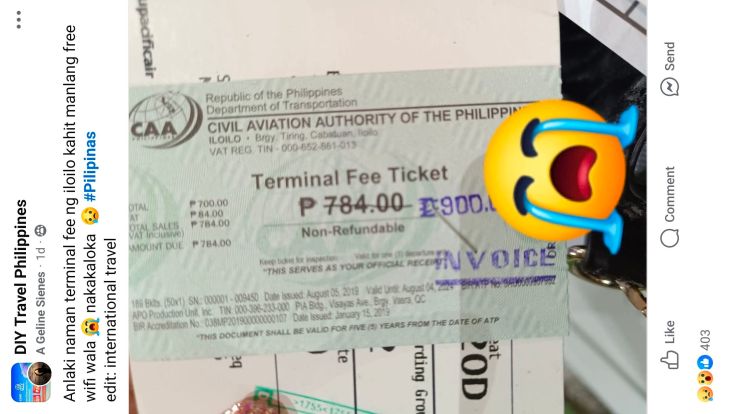
Whether you fly locally or internationally from Iloilo, you’ll only pay the official fees set by law – no secret surcharges. As of April 2025, CAAP’s Passenger Service Charge (terminal fee) is ₱350 for domestic departures from an international airport (like Iloilo) and ₱900 for international departures. These rates came from CAAP Memorandum Circular 019‑2025 (effective Apr 21, 2025) and apply to tickets issued on or after that date. (Tickets bought before Apr 21 keep the old rates.)
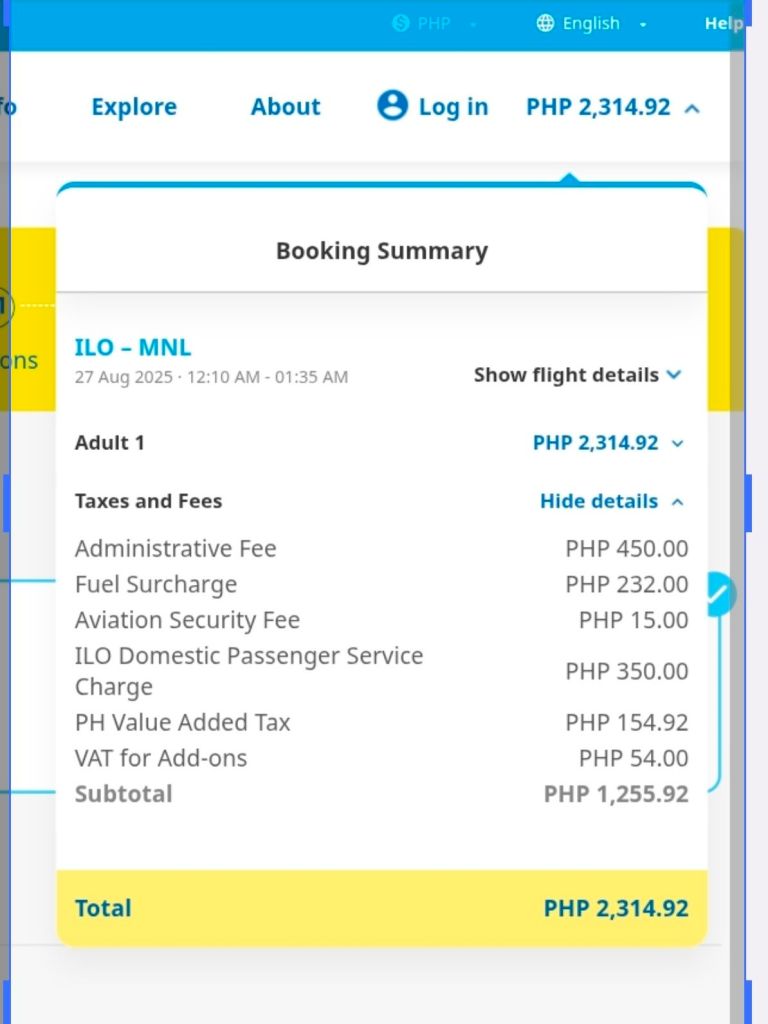
- Domestic flights – ₱350. At Iloilo Airport, the Passenger Service Charge for domestic departures is now ₱350, representing an increase over the 2015 rate of ₱200. This fee may already be included in your ticket; check your airline ticket to confirm.
- International flights – ₱900 (Passenger Service Charge). At Iloilo International Airport, this terminal fee is collected at the airport before the immigration counter and is usually not included in your airline ticket. Please note: the Travel Tax—separate from this terminal fee—is also payable unless you qualify for an exemption.

These fees are the same at all CAAP‑run international airports (e.g. Davao, Bohol, Puerto Princesa, etc.).
How Iloilo’s Fees Compare to Other Airports
CAAP’s terminal fees cover all its managed airports. Other airports may set different amounts:
Clark International Airport: ₱750 for international, ₱300 for domestic (fully integrated into the ticket price). Clark actually collects PSC in advance via airline ticketing.
NAIA (Manila): The new operator plans to raise terminal fees to ₱950 (int’l) and ₱390 (domestic) by Sept 2025. This is higher than Iloilo’s, but note NAIA’s fees are set by a separate authority (MIAA/NNIC).
Other CAAP international airports: also ₱900/₱350 just like Iloilo.
So yes, Iloilo’s fees are standard for CAAP airports. In fact, business groups (e.g. Iloilo PCCI) have questioned only the lack of notice, not the fee level itself. CAAP defended the hike as its first in nearly two decades, done after industry consultations.
How Fees Are Paid (Ticket vs. On‑Site)
Philippine airport fees are usually included in your ticket: by regulation, airlines collect the Passenger Service Charge when you book. For domestic flights, the PSC has been part of fares since 2017, so you won’t be asked to pay again at the gate. For international flights, Cebu Pacific typically does not add the ₱900 terminal fee (Passenger Service Charge, PSC) or the ₱1,620 travel tax to the ticket price; instead, these charges may be collected at check-in or at the airport before you proceed to immigration — the travel tax is collected by TIEZA (Tourism Infrastructure and Enterprise Zone Authority) at the airport.
Domestic PSC: Collected by airline when you buy the ticket. No counter payment needed.
Intl PSC (₱900): You pay at the airport before proceeding to immigration.
Travel Tax (see below): Separate from PSC and often collected by the airline or at a tax counter. OFW’s are exempted from this.
Rumors vs. Reality
Lately social media posts have described a “cash‑only ₱900 departure tax” at Iloilo, implying something shady. In reality, that ₱900 is just the official PSC for int’l flights. It’s not a hidden fee. CAAP’s circular and even the local press confirm: “Under the new structure effective April 21, 2025, PSC for international departures…will rise to P900…”. In other words, travelers are paying exactly what CAAP set.
Some TikTok/Instagram stories dramatized a makeshift booth with hand-written “₱900 CASH ONLY” signs. This seems to have been how one traveler experienced paying the PSC. But again, this is just collecting the official fee. The key facts are:
Iloilo is not charging anything beyond the legal fees. The PSC (₱900) and travel tax (₱1,620) are set by national law/agencies.
No extra surcharges. We found no evidence of any “extra Iloilo airport fee” above these.
Timing and payment method caused confusion: The ₱900 PSC takes effect Apr 21, 2025 and is collected for tickets bought after that date. Before that, old rates applied. Also, requiring cash (no card) at the booth is a quirk, but CAAP issues official receipts for it.
In short, the “controversy” stems from misunderstanding the rules. The PSC was raised uniformly across CAAP airports, and travel tax is separate. There’s no extra hidden charge unique to Iloilo. As one news report puts it, the fee hike “will apply only to tickets purchased on or after April 21” and existing tickets “will not be charged any additional fees”.
Official Clarifications and Advice
The Civil Aviation Authority of the Philippines and airport operators emphasize transparency: these fee changes were done through official memos and consultations. The PCCI‑Iloilo (local business chamber) has asked CAAP and DOTr to hold dialogues on the fees, but even they acknowledge the math of the new PSC is correct.
What travelers should do: Book your flight as usual and check your receipt. Your ticket (or airline itinerary) should already list the terminal fee and travel tax. Make sure you carry at least ₱2,500–3,000 in cash if flying internationally from Iloilo – enough for the ₱900 PSC and ₱1,620 tax (in case you need to pay at the airport). By being informed, you’ll avoid any last-minute surprises.
In summary: Iloilo’s terminal fee is not unusually high or hidden – it follows CAAP’s 2025 rate of ₱900 (intl) / ₱350 (dom). These are comparable to other airports. The travel tax (₱1,620) is separate. Both are paid in official ways (included in your ticket or at designated counters). Stay calm, pay only the legal fees, and enjoy your trip!
Sources: Official CAAP memo and news reports confirm these rates; the TIEZA tourism site lists travel tax rates; Clark Airport (CRK) and NAIA operator pages provide comparisons; local media explain the fee hike context.
 Ilonggo Traveler
Leave a comment